



























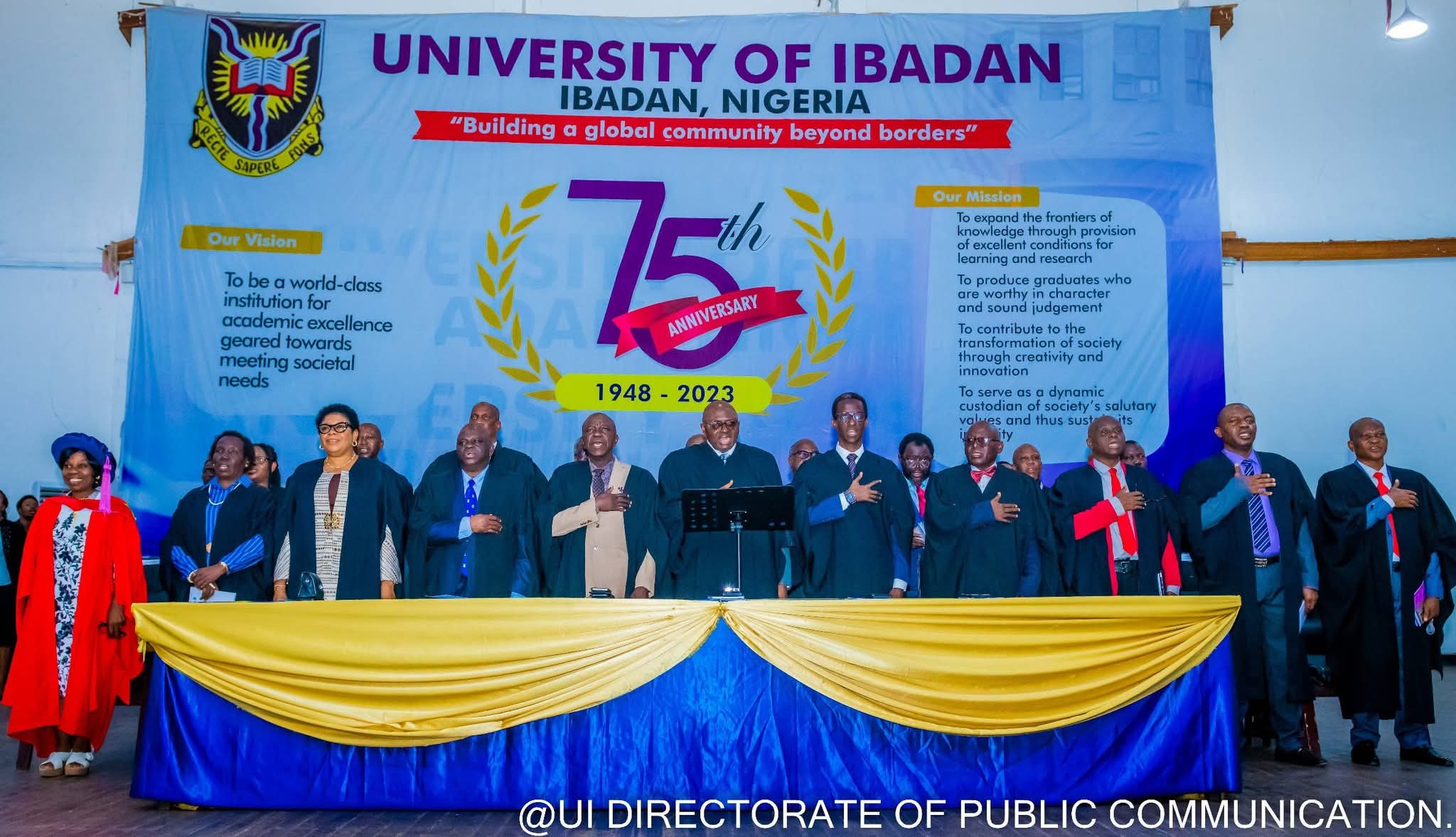
UI — The University of Ibadan Faculty of Law has held its second alumni lecture delivered by Honourable Justice Uchechukwu Onyemenam, JCA, the Presiding Justice of the Court of Appeal, Calabar Judicial Division.

The theme of the lecture was “Customary Law and The Nigerian Legal System.”
Honourable Justice Onyemenam asserted that customary law in Nigeria predates colonial rule and it directed the lives of the populace long before the introduction of the legal system brought along by the British colonial masters.


She explained that indigenous communities had operated under unwritten laws and customs which regulated their societal interactions, disclosing that consequent upon Nigerian’s colonization, the legal framework was restructured to integrate customary law alongside common law.

She disclosed that the recognition of customary law within the Nigerian legal system is explicitly provided in Section 18(3) of the Evidence Act, which states that it is applicable provided it is not repugnant to natural justice, equity, and good conscience.
The Alumni Lecturer said customary law generally means laws relating to customs or usage of a given community, explaining that it emerges from the traditional usage and practice of a people in a given community which by common adoption and acquiescence on their part and by long and unvarying habit acquired, to some extant element of compulsion and force of law with reference to the community.
She added that because of the element of compulsion which it has acquired over the years by consent, consistent and community usage, Customary Law attracts sanction of different kinds and is enforceable, describing it as a mirror of accepted usage.
Honourable Justice Onyemenam said customary law holds a significant position within Nigeria’s legal framework, reflecting the diverse cultural practices and traditions of its over 250 ethnic groups.
However, she said Nigeria does not have a uniform customary law, but explained that these laws, rooted in the customs and traditions of various communities, operate alongside other laws, including the English laws.
She acknowledged that there are inherent limits and challenges in the application of customary law, explaining that the legal and institutional constraints of customary law are delineated by constitutional provisions and statuses, which subject its application to rigorous validity assessments within the court system.

The Legal Icon said that these constraints are intended to prevent the enforcement of detrimental customs, regulate their interaction with other statutory laws and establish the procedures for their acceptance and presentation in court.
She mentioned that this constitutes some limitations to the application of customary law summarizing them as statutory limitations, exclusion from criminal laws, the repugnancy test, incompatibility with written law and public policy.
In addition, she explained that customary law is subordinate to other legal frameworks and is subject to court rulings, stating that it is unwritten and variable in nature.
Despite facing various challenges, she said the system has successfully moved away from its former label as “native courts”, which was often seen as paternalistic and neo-colonial, saying that today, it is recognized as a reputable and established system of justice.
Honourable Justice Onyemenam restated that the main goal of creating the customary court system was to bring justice closer to the people and make it more relevant to their everyday lives, while honouring local customs and practices.
She, however, said that this goal has not been fully achieved by the current customary system. She, therefore, advocated the elevation of more Customary Court of Appeal Judges to higher appellate courts to foster the growth and development of the customary law practices.

She also called for a reorientation of the Chairmen and Members of the Customary Court regarding judicial ethics, etiquette, and best practices and called for the implementation of deliberate policies to expand both the subject matter jurisdiction and monetary jurisdiction of the Customary Court, saying this will raise awareness and increase traffic.
Beyond Politics and Promises: The Leadership Footprint of Seun Ashamu By Asimiyu Muideen
The Alumni Lecturer urged the judiciary to grant the Customary Courts access to online law reports, statutes, and law books and correspondingly, she advised that more judgements emanating from the Customary Courts should be made available online.
The Dean of Law, Professor John Oluwole Akintayo, described Honourable Justice Uchechukwu Onyemenam, JCA as a distinguished alumna of the faculty who has blazed a trail in the legal profession.
He expressed confidence that her lecture will not only increase knowledge on the subject matter, but inspire students of the faculty who formed a larger percentage of participants at the lecture.
Courtesy: UI DIRECTORATE OF PUBLIC COMMUNICATION