




























Political parties are meant to be institutions, not personal estates. Their strength lies in clear hierarchy, shared ideology, internal discipline, and the courage to enforce rules, regardless of who is involved.
I recall the days of the Alert-All Youth Forum in Saki, where party supremacy and respect for leadership were not just slogans but lived principles. On one occasion, the forum’s coordinator asked the President of the Students’ Union Government, Comrade Raheem Musa, to leave a meeting.
It was not an act of humiliation, but a firm assertion of structure and authority. That single decision sent a powerful message to everyone present: no individual was bigger than the forum.
From that moment, discipline was restored. Members aligned with the leadership, respected the hierarchy, and understood that belonging to an organization required submission to its rules. Enforcement created order; sanctions reinforced values.
Fast-forward to Nigeria today, and the story has changed. We have effectively surrendered party leadership to sitting governors, allowing them to dominate structures, impose candidates, and weaken internal democracy.
Ironically, the same excesses we now complain about are the direct consequences of abandoning party supremacy in favor of individual power.
This raises a fundamental question: why should we expect a former governor who showed little regard for his own party’s structure while in office to suddenly respect the leadership of another institution?
Power habits do not change by accident. When parties fail to discipline their own leaders, those leaders lose the moral and institutional capacity to submit elsewhere.
Political parties must reclaim their authority. Supremacy must rest with the party, not with candidates or elected officials. Discipline must be enforced, rules must be upheld, and sanctions must be applied consistently, whether the offender is a ward leader, a legislator, or a governor.
Without strong parties, democracy weakens. Without enforcement, rules become optional. And without sanctions, indiscipline becomes culture.
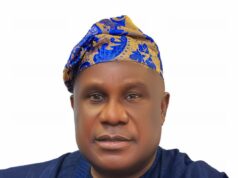
Idris Animasaun
Architect and Social Change Advocate