




























A new WhatsApp fact-checking tool was built with women and marginalised communities at its centre—not as an afterthought
ILORIN, Nigeria — During Nigeria’s election cycles, a particular kind of misinformation circulates alongside the usual false claims about candidates and voting procedures. These are narratives that target women specifically—fabricated scandals, manipulated images, and rumours designed to discredit female politicians and discourage women’s civic participation.
This gendered disinformation operates daily across Nigerian social media and WhatsApp groups, often going unchallenged because the tools to counter it rarely reach the women most affected.

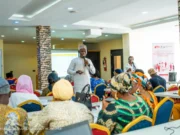
On Friday, Brain Builders Youth Development Initiative launched MyAIFactChecker, a WhatsApp chatbot that allows users to verify information in English, Yoruba, Hausa, and Igbo. What distinguishes this tool from other fact-checking initiatives is not just its technology but its design philosophy: inclusion was treated as foundational rather than optional.
“Technology is only inclusive if inclusion is intentional,” said Sanni Alausa Issa, Communications Director of Brain Builders, at the launch event.


Designed for those usually left out
Brain Builders built the chatbot after recognising that their previous web-based platform failed to reach the communities most vulnerable to misinformation. Data costs, unreliable connectivity, and limited access to smartphones capable of browsing websites created barriers that fell disproportionately on women, rural communities, and lower-income users.
WhatsApp offered a different path. The platform reaches over 500 million people across Africa, runs on basic phones, and consumes minimal data. By embedding fact-checking within the same app where misinformation spreads, Brain Builders removed several obstacles that typically exclude marginalised users from verification tools.
The chatbot includes voice-to-text functionality, meaning users do not need to type to verify a claim. This feature proved especially valuable during testing for users with lower literacy levels and persons with disabilities. Users can speak their questions and receive responses in the language they think in.
Reaching women directly
During community outreach ahead of the 2025 Anambra gubernatorial elections, Brain Builders deliberately structured engagement to reach women. The organisation worked through women’s groups and community leaders rather than relying on general public announcements that might not penetrate networks where women gather.
Training sessions used visual tools—flashcards and placards—to ensure participation was not limited by literacy. Accessible seating arrangements accommodated persons with disabilities. These were not adjustments made after the programme was designed; they shaped the programme from the start.
Anita, a participant in the Anambra sessions, said the engagement changed more than her knowledge. It changed her habits. She now double-checks information before sharing and encourages other women in her community to do the same.
Before the training, only 14 percent of participants felt very confident identifying false information. Afterward, 72 percent reported that confidence. More significantly, 78 percent said they would now verify claims before passing them on—a shift in behaviour, not just awareness.
Why gendered disinformation matters
False narratives targeting women in politics serve a specific function: they raise the cost of public participation. When a female candidate knows that fabricated stories about her personal life will circulate the moment she announces her candidacy, she must weigh that cost. When women voters encounter repeated claims that politics is not their domain, some disengage.
The consequences extend beyond individual elections. Sustained gendered disinformation shapes who believes they belong in public life and who does not.
Tools like MyAIFactChecker cannot eliminate this problem. But they offer a way for women to verify the claims they encounter and to share verified information with their networks. In WhatsApp groups where misinformation often goes unchallenged, one person equipped with facts can shift a conversation.
Scaling with intention
Brain Builders received support from CIVICUS and the Digital Democracy Initiative through the Digital Action Lab. The organisation plans to expand MyAIFactChecker across Nigeria and throughout the continent.
As the tool scales, the question will be whether the intentionality that shaped its design survives growth. Reaching more users is straightforward. Reaching the users typically excluded, and reaching them in ways that respect their contexts, requires sustained commitment.
BBYDI Launches WhatsApp Chatbot to Fight Misinformation Where It Spreads Fastest
Sanni framed the challenge in terms of responsibility rather than technology.
“Women deserve access to safe, verified information,” he said. “So do young people, rural communities, and anyone who has ever felt excluded from the digital conversation.”
The chatbot is now available on WhatsApp. Whether it fulfils its promise depends not just on the tool itself but on whether the communities it was built for can access it, trust it, and use it to protect themselves and each other.
MyAIFactChecker is available on WhatsApp via https://wa.me/+18434381502. Users can submit claims for verification in text or voice format in English, Yoruba, Hausa, or Igbo.