
























By Minkail Olaitan

When it’s more than a game.


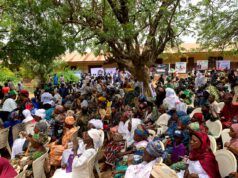
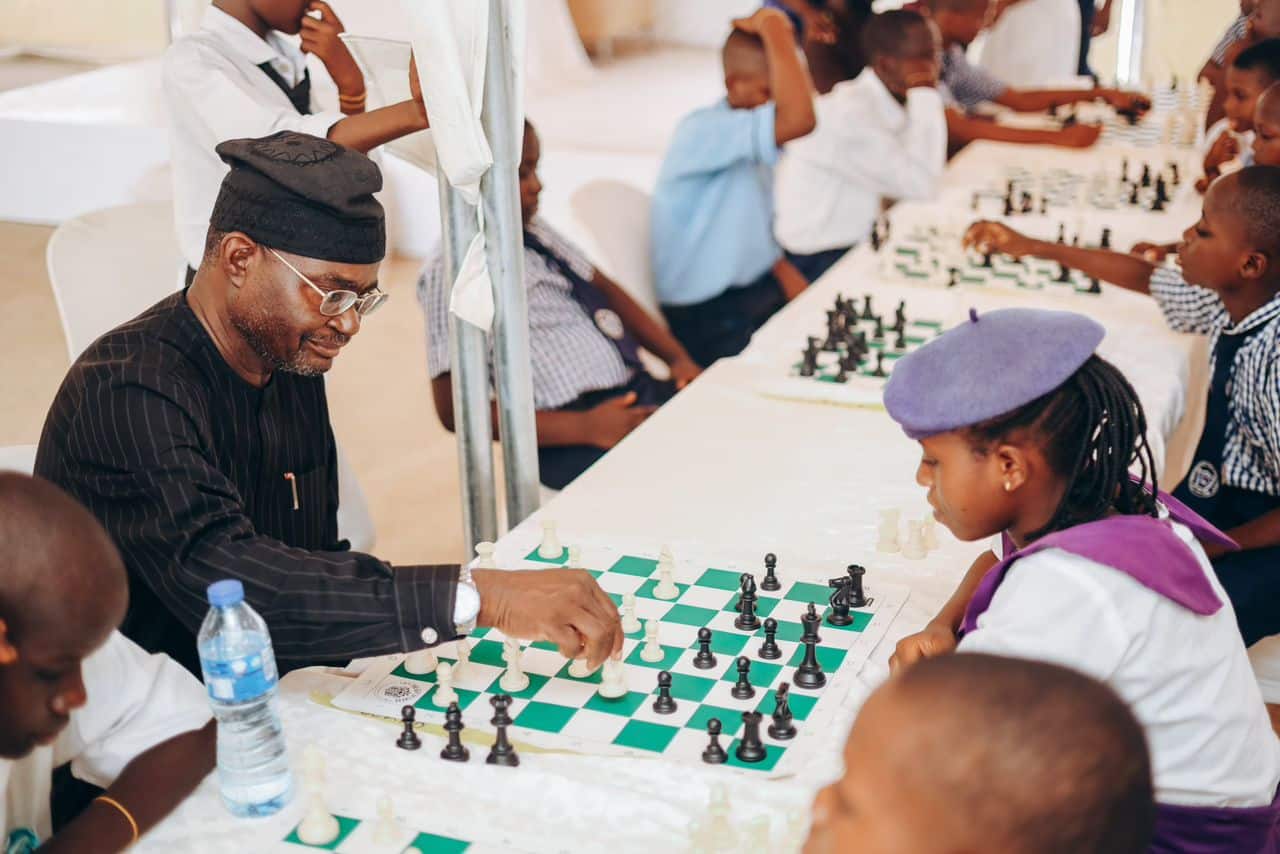
Over the course of three years, the game of chess has experienced what can be called a ‘stylistic redefinition.’ This transformation was not sudden; it’s a gradual, consistent, rapid incitement of unmistakable popularity, like a blacksmith relentlessly hammering a sheet of iron until the shape finally emerges. Yes, the shape is shown; however, the efforts to propagate the new cool continue. The primary purpose of this piece is not to dwell on chess’s growing acceptance, popularity, or universality, but to examine its profound impact in the IDP camps of Adamawa—and to explore the tremendous possibilities it unlocks.
Inarguably, Chess has crept into unlikely places across the world. However, the truth remains that IDP is one of the most dejected places. This place doesn’t reveal to the victims their distasteful reality and how they are disconnected from their roots. It’s also to impress upon them the feeling of helplessness and wretchedness as identity. Unlike prison, there are no high gates and intimidating walls – for every IDP child, the wall is a simulation that whispers limitation, identity erosion, mental incapacitation, intense inferiority complex, and insecurity.
Displacement is a rude monster; it etches tattoos of outcasts in the souls of its victims.
Hunger Reigns In Rice Republic; Where Is Yari?
Truth is, they need nobody to tell them they are at a disadvantage; it’s like telling a poor man he’s poor, he knows. But who knows how far it will go if these kids are introduced to an entirely new story, a new apparatus that makes new thoughts possible, and a different world conquerable. Perhaps the existing mental state can be overridden by a new profound, positive, and transformative simulation. That reintroduces them to the possibility that each of their lives holds. That was probably the thought as chess was introduced to the IDP camp.
A fresh challenge soon emerged. “Help” could not end with teaching the game and equipping the children with knowledge. There had to be real opportunities—provisions that assure them of equal footing with the rest of the world.
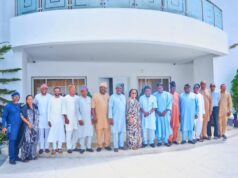
For instance, Vivian Ibrahim, the convener of the chess initiative in the IDP camp, recounted a certain day somewhere around September 2025 when Senator Reverend Binos Dauda Yaroe, the senator representing Adamawa South and who also is a passionate chess enthusiast and selfless supporter of the chess initiative in IDP camp, called her to inquire about why the name of the Adamawa Chess Team was not included in the medalist list for the just concluded tournament.
When explaining the plight of the team, which is largely predicated on a lack of enough resources to make necessary provisions, which covers the team’s transportation, and the instructors’ pay.
This was experienced by the team when Vivian was thousands of miles away in Rwanda, and the timely intervention of the Senator affirms the notion that the road doesn’t end with the introduction of the chess, but in a proper propagation enabling environment and availability of opportunities to thrive.

It’s similar to the complexity depicted in the movie, “Tiger Nageswara Rao.” When the storyteller was questioned about the morality of the complex villain who threads the extremes to procure and provide solutions to his community’s problems, he said, “He believed providing education to the youth of Stuartpuram would be sufficient, and they would forge their own paths. But on that day, Nagi realized that in addition to teaching them how to walk, he also bore the responsibility of paving the way for them.”
Road to the secondary school chess tournament.
Recall the exasperation of Sen. Binos Dauda Yaroe? They say anger is not totally negative or destructive. It can also inspire radical change and become fuel for disruptive innovation. For Chess and the Adamawa team in Vivian’s care, it appears that it birthed a kind of tournament where inclusion will be centrepiece.
It is noteworthy to expound briefly on the sharp contrast between the acceptance of the game of chess in southern Nigeria versus northern Nigeria. In Northern Nigeria, chess is rarely accepted unlike the profound proliferation in the south. Hence, people like Sen. Binos received occasional criticism and backlash from those who are indifferent about the inherent transformative power of chess.
Some called the game insignificant and insufficient to the nature of challenges bedevilling their region. Still, Chess in Adamawa must charge forward, even if the void is way more obvious than the light. Particularly in the IDP camp where children are now regaining their sparkle, and developing the muscle to accept hope once again. It’s never the time to gutter those little lights.
In the first place, these kids who by the reason of circumstance have been conditioned to think poorly of themselves were created to be ostracised, bullied away from purpose by the ungodly adversity. Neither should the world allow the displacement to invalidate their genius. It’s therefore incumbent upon society that a deliberate and intensive approach is made to override limiting mentality and recondition them for greater exploitation.
One needs not consult an oracle to know whether or not it’s possible. The works and impacts of chess through the Chess in Slums is proof that the unlikely places hold immeasurable treasures. IDP Camp shares similarities with Slums across Lagos. In a brief spontaneous interview with Vivian Ibrahim, when asked what keeps her motivated despite the odds and challenges she faces tending to kids and the chess team.
“Watching the kids react to the little victories we surely have really fascinates me.” She said, “It’s heartwarming watching the kids believe in themselves in their little ways and going ahead to make bold moves that earn them victories motivates me. It’s what I desire to see every day. I learned through staying around these wonderful kids that there are little things we tend to trivialise, especially when they have experienced them time without number… but watching their reaction on certain things earns me the realization that those little things matter. For instance, winning might be common to a person, but to some it’s a strange little visiting light.”
Hence, the initiative behind Sen. Binos Dauda Yaroe Secondary School Chess Tournament is deeply entrenched in the vision to propagate strategic consciousness in the state as the Chess Teams from different backgrounds mix together based on their ability not privilege. To buttress the dream of Dr Martin Luther King Junior as proclaimed in his Monumental Civil Rights movement speech, “I Have A Dream.”
“I have a dream that my four little children will one day live in a nation where they will not be judged by the color of their skin but by the content of their character.”
The dream is an emblem of hope carried by everyone who believes the age-long vast berth between the privileged and underprivileged will be fixed, and lines that indicate their differences will be erased for good.
As the tournament—slated for 7 March 2026 at Nurses House Hall, opposite Market Gate 2—draws nearer, excitement builds. There is firm hope that it will spark a shift whose echoes reach the more than 350 IDP camps and settlements across Nigeria, places where hope is so often lynched. May the impact reverberate through the state with vindicating crescendo.
Of course, the insistence of the agents of change will not go unnoticed.
While anticipation builds for the tournament, the hope of the organizers is that it heals everyone totally from the perilous blow life dealt them, but even if that’s impossible, it ensures, ultimately that through the intervention of the game of chess and the incentives it gives, hearts are reconditioned, hope is reenacted, purpose is recovered, spirit is reinvigorated and life is restored.