


























ILORIN — Brain Builders Youth Development Initiative says communities in Kwara State have established their own GBV reporting desks, social charters, and marriage agreements after a two-year prevention programme. In one community, 12 cases of gender-based violence have been formally reported and 10 resolved through structures that did not exist eighteen months ago.
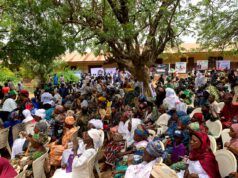
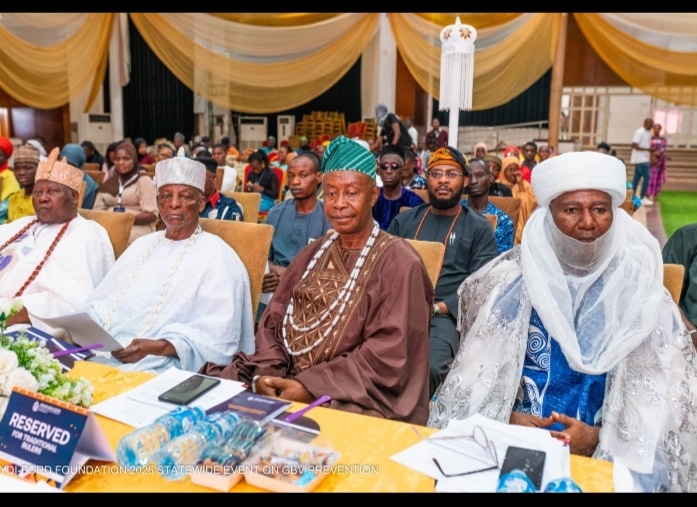
The results were presented on Thursday at the second GBV Prevention Statewide Event at the Kwara State Banquet Hall in Ilorin, convened by Brain Builders Youth Development Initiative. Over 200 participants attended, including 14 traditional rulers from across the state.

BBYDI spent two years conducting 16 engagements with first-class traditional leaders and running workshops across Kwara’s three senatorial districts. In Alalubosa, the community Mogaji now chairs a GBV reporting desk and a binding marriage agreement sets out consequences for spousal violence. In Agbarere and Ganmo, social charters signed by religious, youth, and women leaders now set out how GBV cases are handled locally.


A Yoruba-language edition of BBYDI’s GBV Prevention Advocacy Toolkit was launched at the event. The English-language version, which carries a foreword by the Emir of Ilorin, was first published last year. Traditional leaders had requested a local-language edition at the inaugural statewide event in 2025.
The Kwara State Governor was represented by Hajiya Mariam Nnafatima Imam, PhD, Commissioner for Social Development. Dr. Usman Atolagbe Abubakar Jos, the Balogun Alanamu of the Ilorin Emirate, represented the Emir of Ilorin.
BBYDI Launches WhatsApp Chatbot to Fight Misinformation Where It Spreads Fastest
Izeduwa Derex-Briggs, Programme Officer for Gender, Racial, and Ethnic Justice at the Ford Foundation’s West Africa office, said the Foundation backs prevention over response. “At Ford Foundation, we do not wait for violence to happen. We are invested in ensuring that GBV does not happen,” she said.
In her keynote address, Prof. Saudat Salah Abdulbaqi, Dean of the Faculty of Communication and Information Sciences at the University of Ilorin, called on traditional leaders to use their authority actively, noting that most survivors seek help within their community before approaching formal institutions. “What leaders tolerate becomes culture,” she said. “What leaders condemn begins to change.”
BBYDI also highlighted its AI-powered WhatsApp chatbot KEMI, which provides support to women and girls experiencing technology-facilitated GBV across West Africa, and a 21-member multi-stakeholder committee on GBV inaugurated in Kwara State.