














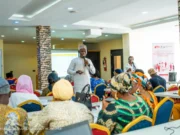








A high-level education conference has brought together scholars, policymakers, administrators, and stakeholders from across Nigeria to deliberate on the future of education in light of Mega Global Trends (MGTs). The gathering featured keynote and lead paper presentations from renowned academics, stressing the need for learner-centred pedagogies and a redefined mandate for higher education to meet both national and global challenges.
EMMANUEL ALAYANDE UNIVERSITY OF EDUCATION, OYO

COMMUNIQUE OF THE 2ND ANNUAL CONFERENCE ON HIGHER EDUCATION MANDATES IN MEGA GLOBAL TRENDS HELD BETWEEN 1- 4 SEPTEMBER 2025


Preamble
The conference convened scholars, policymakers, educational administrators, and stakeholders to analyse the evolving education landscape amidst Mega Global Trends (MGTs). Featuring a Keynote Presenter, Professor Joel Babatunde Babalola, and lead paper presenters Professors Mudasiru Olalere Yusuf, Francis Fasanu, Abiodun Musa Aibinu and Ndubuisi S. Machebe, the event emphasised shifting to modern, learner-centred pedagogies and redefining higher education mandates for national and global relevance. The conference was well attended by participants from the six geopolitical zones in Nigeria.
At the presentations, the following positions were taken:
1. Paradigm Shift to Learner-Centred Education: There is a need for an urgent transition from teacher-centred methods to learner-centred approaches, where learners are central, with instruction customised to individual needs, abilities, and interests, evolving educators from sages on the stage to guides by the side.
2. Integration of 21st-Century Soft Skills: Redesign curricula to embed essential skills like creativity, innovation, critical thinking, problem-solving, digital literacy, collaboration, adaptability, and communication for modern success.
3. Education Stakeholders should Intensify Competency-Based Learning (CBL): Shift to competency-based learning with mastery-based progression and personalised paths, adopting the I Do, We Do, You Do Responsibility Model to foster independent skill mastery. Decoupling learning from classrooms by supporting anytime, anywhere access; and cultivating continuous learning to match technological and job market changes.
4. Leveraging more Technology-Enabled Learning: Integrate more technology, such as Learning Management Systems (LMS), adaptive platforms, mobile learning, gamification, and Virtual Reality/Augmented Reality (VR/AR), to boost engagement, accessibility, and build a Post-Digital Campus.
5. Strategic Response to Mega Global Trends (MGTs): Promote widespread, lifelong learning independent of traditional classrooms, supporting ongoing skill development to tackle 4IR, AI, climate change, globalisation, and demographics for fair and relevant education.

6. Repositioning Curricula for Global Relevance: Align curricula with SDGs, digitalisation, climate resilience, and 4IR demands, using Strategic Matrix Frameworks for proactive, transformative strategies to ensure globally relevant education.
7. Reinvestment in Faculty and Infrastructure: Educational stakeholders should build faculty expertise in AI, data science, and transdisciplinary research; modernise physical and virtual infrastructure.
8. Reinforcing Access, Equity, Mobility and Value-based Education: Enhance inclusive pathways, support underserved groups, and foster ethical leadership by integrating value-based education, civic consciousness, and adaptive governance for equitable mobility and social responsibility.
9. Industry-Academia Partnerships: Higher Education Innovations (HEIs) must strengthen ties with industry to ensure curricula meet market needs. Collaborations with technology firms can co-design programs, offer internships, and apply theoretical knowledge to real-world problems. These partnerships enhance graduate employability and create a talent pipeline for national economic and technological growth.
10. Introduction of Climate Change Concepts to Basic Education and Building of Sustainable Agricultural Development Framework: Introduce climate change concepts in basic education to build knowledge and skills, alongside a sustainable agricultural framework to enhance productivity and combat climate issues.
Conclusion
This communiqué provides a blueprint for Nigerian education stakeholders—government, regulators, administrators, faculty, students, and the private sector. The conference calls for collaboration and urgent implementation to shift institutions from reactive to transformative roles, thereby fostering a prosperous, knowledgeable Nigeria and Africa.
Dr Grace O. Akanbi, Chairman, Communiqué Committee, Second Annual Conference, Emmanuel Alayande University of Education, Oyo
Dr A. E. Adesina, Secretary, Communiqué Committee
Dr S. R. Amao, Member, Communiqué Committee