


















By SOLA SHITTU
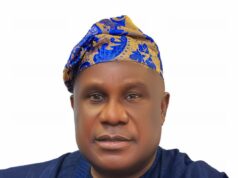
ABUJA – For more than two decades, Oyo State has lived with an uncomfortable political reality that refuses to fade away. It is a reality discussed quietly in government offices and loudly in markets, motor parks and town halls: since the return to democratic rule in 1999, Oyo North Senatorial District has largely remained outside the inner circle of power at the state level. What began years ago as a muted grievance has today transformed into a full-blown political agitation, gaining strength, structure and a rallying point in the person of Senator Abdul Fatai Buhari.
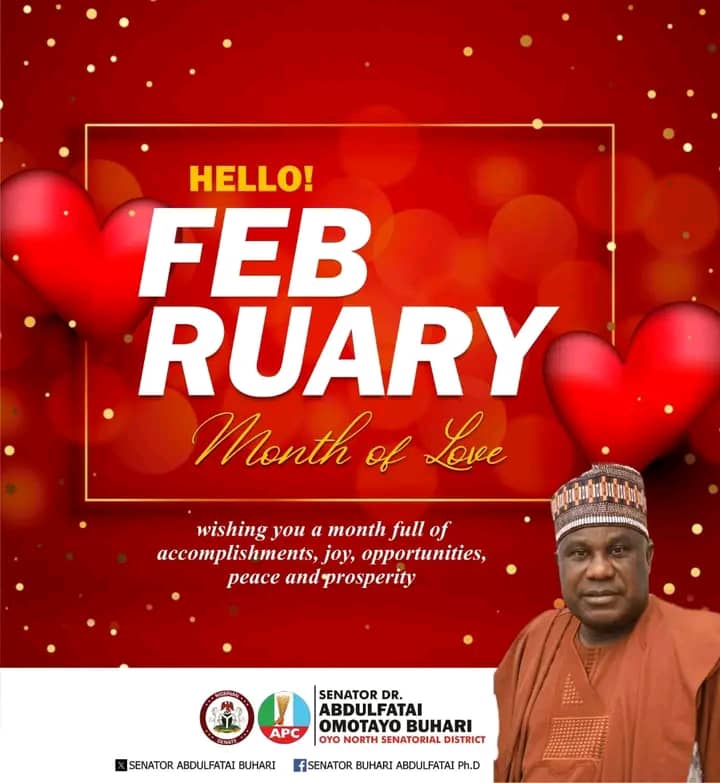

Across Oyo State, the argument is no longer whispered. It is openly debated whether equity, balance and political justice demand that the next governor should emerge from Oyo North. And at the centre of this growing consensus is Buhari, a three-term senator whose political journey has come to symbolise the long wait of his people and their determination to finally be counted.
To understand the depth of the agitation, one must return to the political trajectory of Oyo State since the end of military rule. In 1999, Chief Lamidi Adesina from Oyo South became governor. He was succeeded in 2003 by Senator Rashidi Ladoja, also from Oyo South. In 2007, the state entered a turbulent period when Ladoja was illegally impeached, paving the way for his deputy, Adebayo Alao Akala, from Oyo North, to assume office. Akala would later win election and complete a four-year tenure between 2007 and 2011, but his eleven months in office following political turbulence in the state was declared null and void by the Supreme Court.
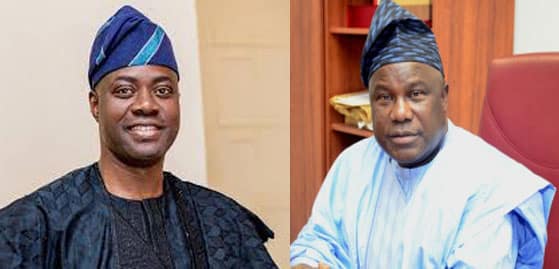
While Akala’s administration remains an important chapter in Oyo State’s history, many in Oyo North argue that it did not fully settle the question of regional inclusion. His emergence was born out of political crisis rather than a clear, uncontested zoning arrangement or a sustained regional consensus. As a result, the sense of exclusion in Oyo North persisted even after his tenure. When power returned to Oyo South under Abiola Ajimobi from 2011 to 2019, and later shifted to Oyo Central with the election of Governor Seyi Makinde in 2019, the feeling that Oyo North had been sidelined yet again deepened.
Today, that sense of marginalisation has matured into a coherent political demand. From Ogbomosho to Saki, Iseyin to Kishi, the conversation is strikingly consistent. Residents acknowledge that Oyo North once produced a governor, but they insist that the region has not truly enjoyed its fair share of power in the Fourth Republic. What they seek now, they say, is not sympathy but recognition, not tokenism but justice.
It is within this context that Senator Abdul Fatai Buhari’s name has risen to prominence. Unlike many aspirants whose ambitions are driven by fleeting political winds, Buhari’s political profile has been built steadily over time. His repeated victories at the senatorial level, across different political climates, have earned him a reputation as a grassroots politician with a wide appeal. Even his critics concede that his political base is not confined to Oyo North alone.
Political analysts describe Buhari as a figure who fits both the moral and strategic arguments of the moment. To supporters of zoning, he represents the long-delayed turn of Oyo North. To pragmatists, he is seen as one of the few aspirants from the region with the structure, name recognition and political capital to mount a serious statewide contest. In a state where elections are increasingly competitive and voter awareness is high, these attributes matter.
Dr. Kehinde Adeyemi, a political scientist at the University of Ibadan, believes the agitation has moved beyond sentiment. According to him, the Oyo North question has become a test case for how Nigerian democracy handles informal power-sharing arrangements. He argues that while zoning may not be written into the constitution, it has evolved as a stabilising mechanism in a diverse society. Ignoring it, he warns, often comes at a political cost.
https://independent.ng/2027-fatai-buhari-and-oyo-norths-governorship-agitation/
Among ordinary citizens, the argument is even more direct. In Ogbomosho’s bustling Arowomole market, traders speak of Buhari not in ideological terms but in practical language. Many recall constituency projects, scholarships and empowerment programmes linked to his years in the Senate. To them, his name is familiar, his face recognisable, his presence tangible. A textile trader, Madam Adebisi Olaniyan, sums up the mood when she says that politics, like trading, rewards those who show up consistently. In her view, Buhari has shown up.
Young people across Oyo North echo similar sentiments. For many of them, the agitation is not just about geography but about dignity. They see the governorship as a symbol of belonging in a state they feel has often taken their votes and resources for granted. A youth organiser in Saki describes the movement as a quiet rebellion against perpetual waiting. He argues that if the political system continues to overlook Oyo North, frustration could turn into apathy or worse.
Interestingly, the sympathy for Oyo North’s demand is not limited to the region itself. In Ibadan, the political and economic hub of the state, traders and artisans express an understanding of the argument. At Bodija Market, a food vendor remarks that fairness is good for peace. Her view reflects a growing awareness that political imbalance, if left unaddressed, can breed resentment that ultimately affects everyone.
Beyond politics, economics plays a significant role in the agitation. Oyo North is widely regarded as the agricultural backbone of the state. From food crops to cash crops, livestock to artisanal production, the region contributes significantly to Oyo’s economy. Yet many residents argue that infrastructure development has not kept pace with this contribution. Poor road networks, limited agro-processing facilities and inadequate market access remain persistent challenges.
Community leaders believe that political inclusion could change this narrative. They argue that having a governor who understands the peculiar challenges of Oyo North would naturally redirect attention and resources to long-neglected areas. For them, Buhari’s background and legislative experience position him as someone who could translate regional needs into actionable policies.
BAF: Reflecting on the Celebrations of a Distinguished Senator AbdulFatai Buhari PhD
Traditional rulers have also added their voices to the conversation. While careful to maintain neutrality, several monarchs in Oyo North have spoken openly about the need for balance and harmony. Their interventions, often framed in cultural and moral terms, carry significant weight. In a society where traditional institutions still command respect, such statements reinforce the legitimacy of the agitation.
National observers are watching developments in Oyo State with interest. Some see the unfolding debate as part of a broader rethinking of power distribution in Nigeria’s sub-national politics. Dr. Aisha Suleiman, an expert in electoral behaviour, notes that zoning has become an informal contract between political elites and the electorate. When honoured, it builds trust; when violated, it fuels disillusionment. In her assessment, Oyo State stands at a delicate moment where choices made now could shape political stability for years to come.
Oyo North Lawmaker, Sen. AbdulFatai Buhari Visits Oloka Village After Bandits’ Attack
As 2027 approaches, political parties face a strategic dilemma. To ignore the Oyo North agitation is to risk alienating a large and increasingly vocal segment of the electorate. To embrace it is to redraw internal power maps and possibly upset established interests. For many party strategists, Senator Buhari represents a compromise between principle and pragmatism, a candidate who satisfies the equity argument without sacrificing electability.
What is clear is that the agitation has already altered the tone of political discourse in the state. No longer dismissed as a regional lament, the call for Oyo North’s turn has become a central theme that serious contenders must address. Buhari’s aspiration has, in many ways, given the movement a human face, transforming an abstract demand into a concrete political project.
BAF: The Man To Reposition Oyo For Exponential Growth and Development | Olamiju Alao Akala
In the end, the question before Oyo State is larger than any individual ambition. It is about whether democracy can be seen not just as a contest for power, but as a system capable of correcting imbalances and renewing trust. For supporters of Senator Abdul Fatai Buhari, the answer lies in allowing Oyo North to finally take its place at the centre of governance.
Whether that hope translates into electoral victory remains uncertain. But one thing is clear: the agitation for Oyo North’s turn is no longer a footnote in Oyo politics. It is a defining conversation, and Senator Fatai Buhari stands firmly at its heart, carrying the expectations of a region that believes its time has come.
First Published on Daily Independent Newspaper